

Creating a visual world for Big Big Train's Woodcut
Learn about how we created visuals for every track on Big Big Train's 2026 album Woodcut, used for promotional music videos and live visual films for the 'The Woodcut & Other Stories Tour'!

Written by Rob Skarin
Published on September 24, 2026
When Big Big Train asked us to create a series of music videos for their 2026 album Woodcut, we were thrilled, as it’s an excellent concept album with a story that we knew would translate well to a 3D animated approach. Initially we had created videos for The Artist, The Sharpest Blade and Counting Stars which were released as promotional videos for the album campaign. In these videos we aimed to convey as much of the story as possible, but when the opportunity arose to produce additional videos for the rest of the album, we were able to expand on what we had already produced and fill in the gaps to create a full album-accompaniment.
The Story of Woodcut
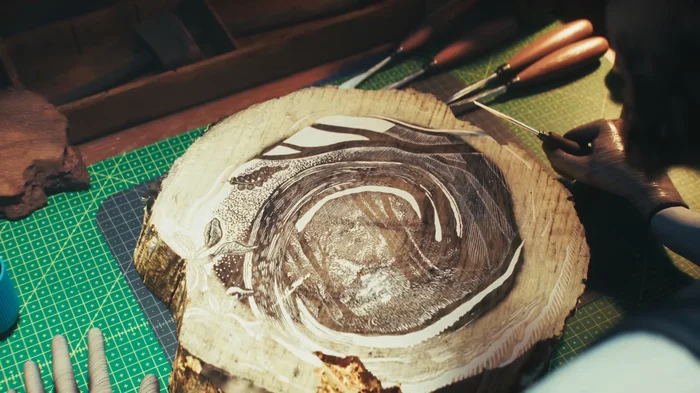
The concept album’s narrative follows The Artist, who is struggling with life, creativity, and the fine line between inspiration and madness. At the start of Woodcut, the artist is creatively deflated and struggles to find a subject for his artistic ability. He finds a heartwood deep in a forest and new inspiration strikes. (The Artist, The Lie of the Land) As he begins to carve into the heartwood, a paranormal force begins to emerge and guide his hand along the wood grain… (The Sharpest Blade) After pressing the heartwood carving into the paper with his Albion Press, he is transfixed by his new artwork, which opens a doorway into an Arcadian world, which seems perfect. As the Artist explores Arcadia, he notices the work of other hands, and he feels the presence of the supernatural entity inside the heartwood. This entity challenges his resolve and forces him to confront his fears in Dead Point. As the Arcadian landscape withers away in a winter frost (Light Without Heat, Dreams In Black and White) the final test presents itself in Cut and Run. In “Counting Stars”, the artist finally leaves his workshop, and ventures outside, where he is able to disconnect from the emotional turmoil of the creative process in carving the Woodcut. The demon entity vanquished, he is then able to look out into the beautiful night sky and he is released from the darkness he found in the heartwood.
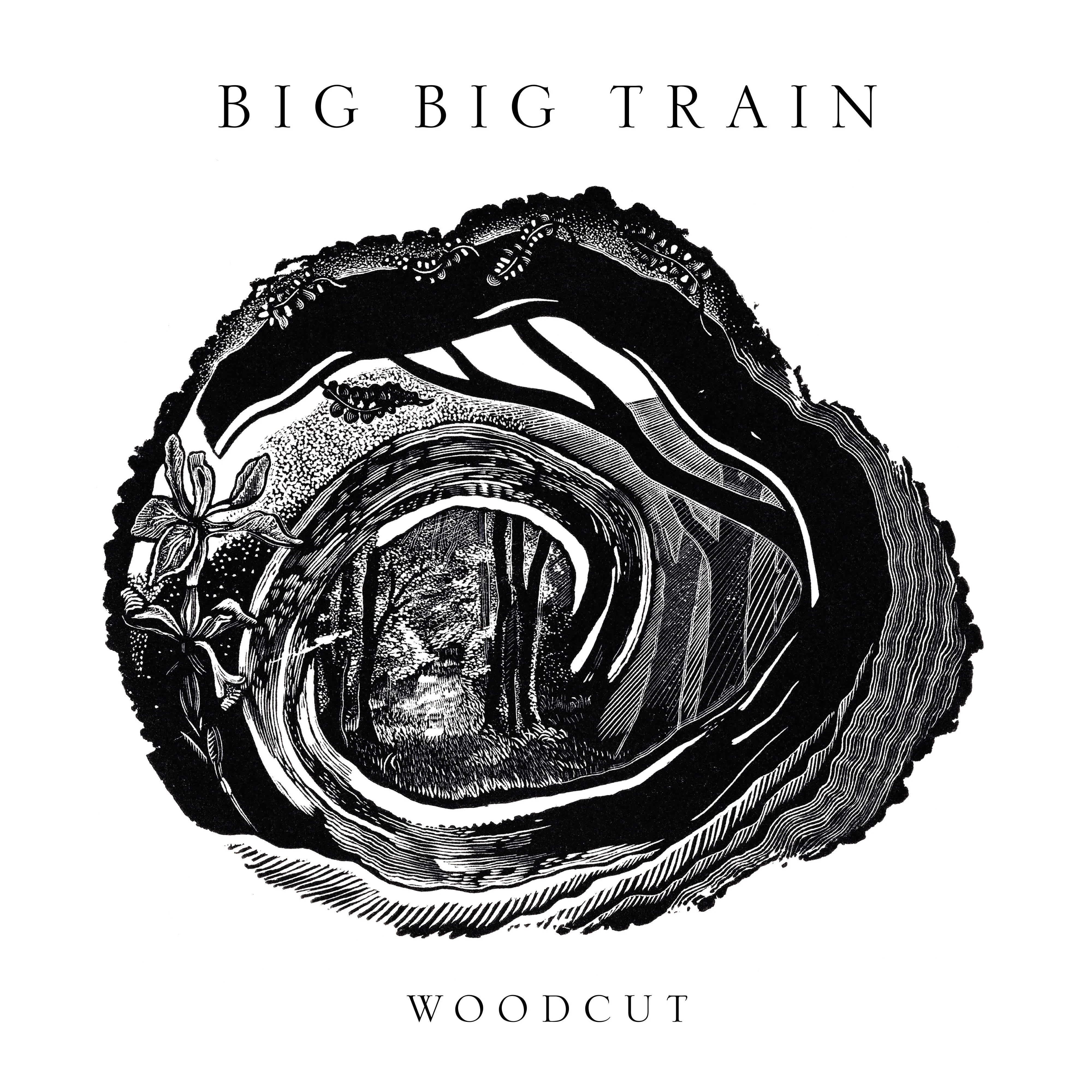
How we make our videos: Cinema 4D and Octane Render
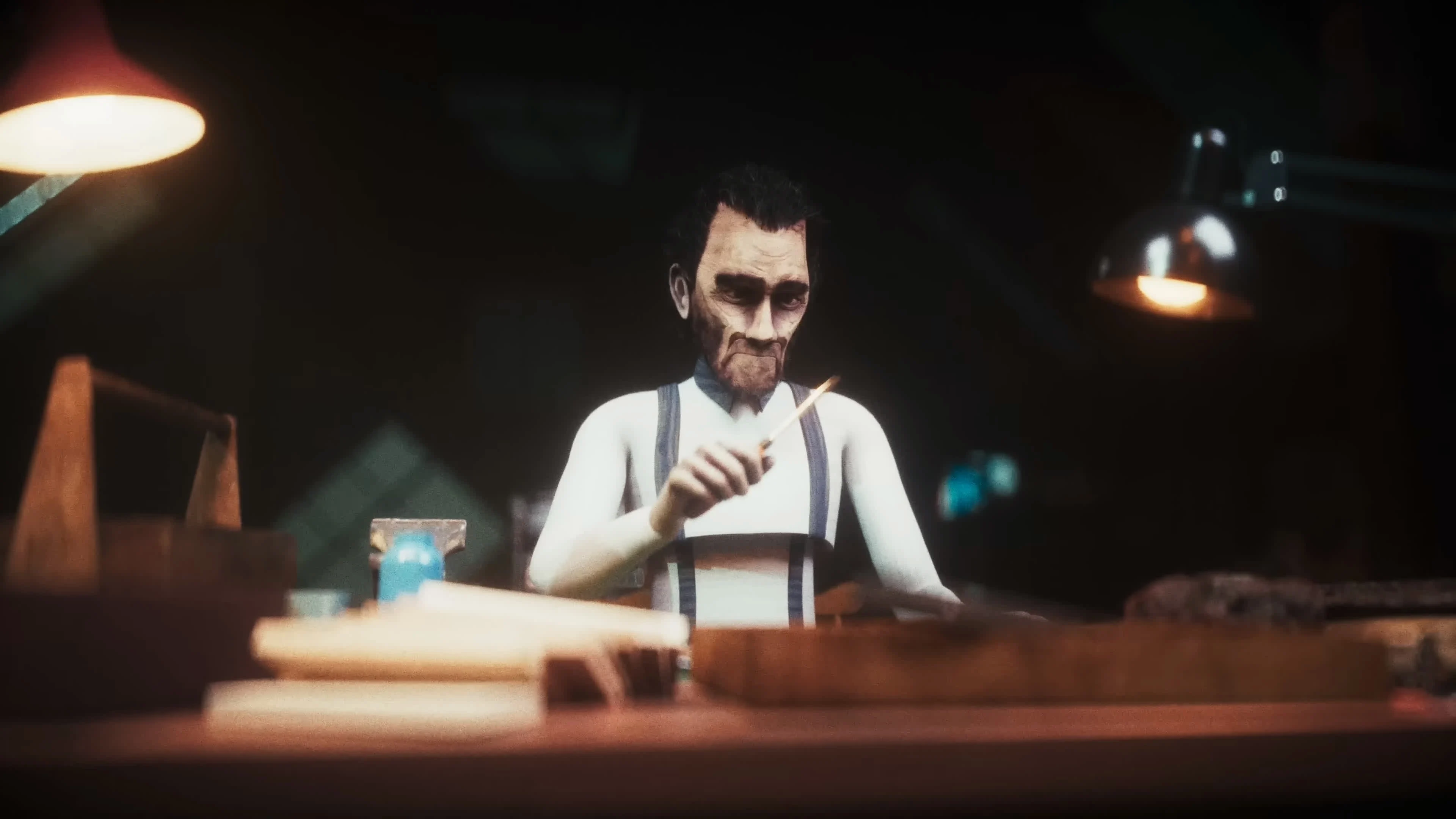
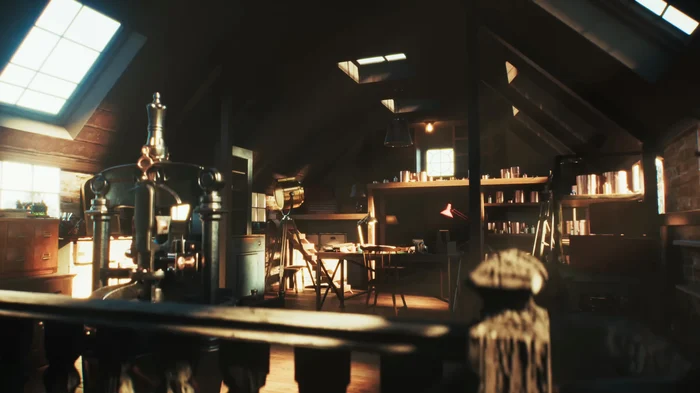
For our video projects we primarily use Cinema 4D and Octane Render. Cinema 4D is a 3D modelling and animation software where we can design, model, rig and animate full 3D characters and environments. To turn these 3D models into a final image, we use Octane Render, which traces the light rays in the scene to create the final image, aiming to replicate the same process of how light works in real life! This results in a very accurate, realistic representation of light and camera optics, in a digital space. Once we had the Workshop environment and the Artist character asset created, we were able to start animation to bring it all to life. We worked to keep a handmade look throughout, and when combined with Octane Render’s photorealistic rendering capabilities, it makes for a very tactile image! We especially like the materials for the mats on the workbench, and layering these gave a sense of a used workspace! Once the scenes are ready to “render” they are scheduled on our in-house render farm where we distribute the processing across multiple computers (all built by Miles!) and each frame on average takes 20-30 seconds to complete. With 24 frames in every second of animation, that’s around 8 minutes for every second of imagery you see!
We don’t use any generative AI tools to create videos, as we prefer the challenge and ultimate reward of making something by hand - whether it’s created digitally or practically, “traditional” 3D modelling and animation still has a beautiful charm to it and for us, the main thing is that we enjoy making our videos, so we would never want to skip that process as that is all part of the joy of doing what we love to do.
The Artist
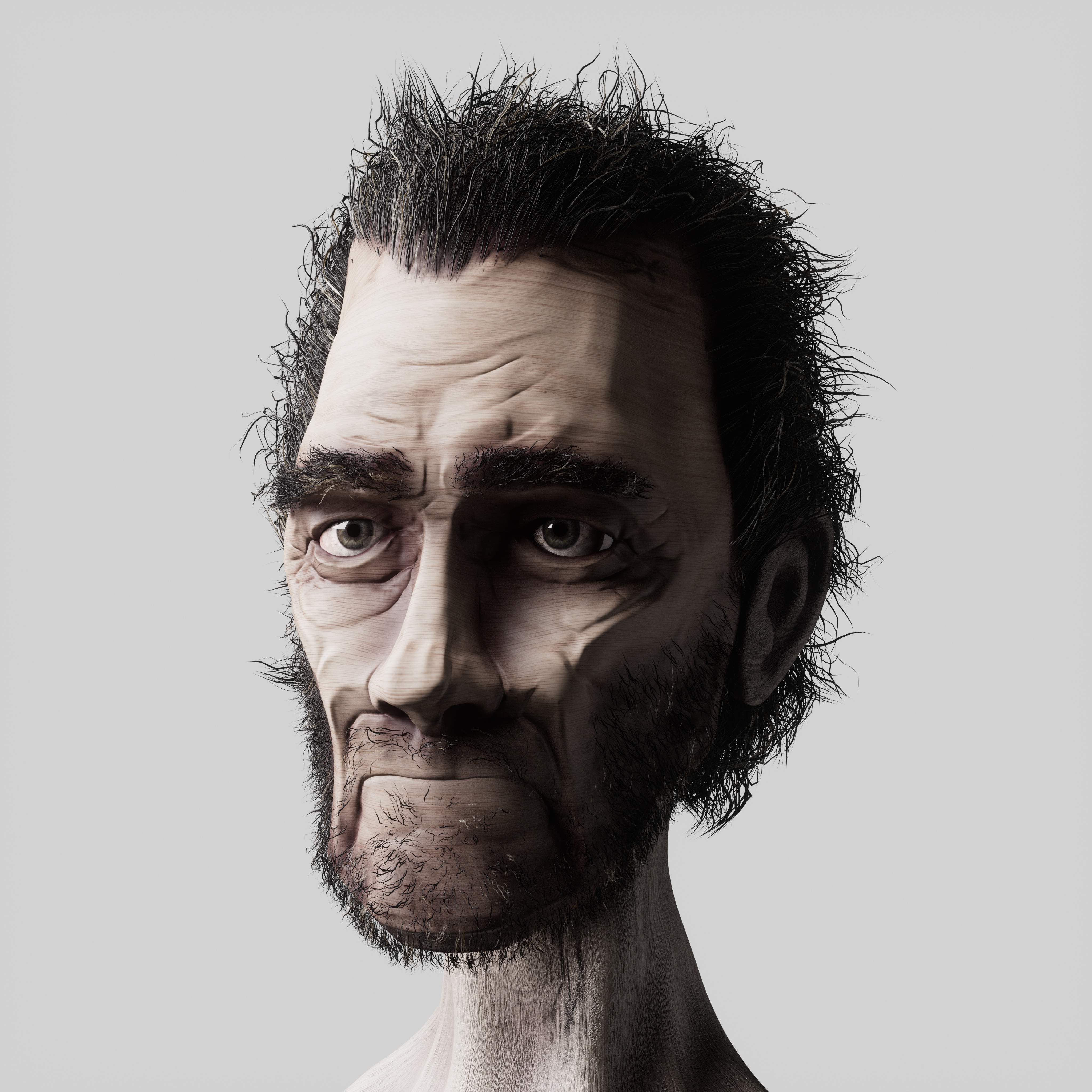
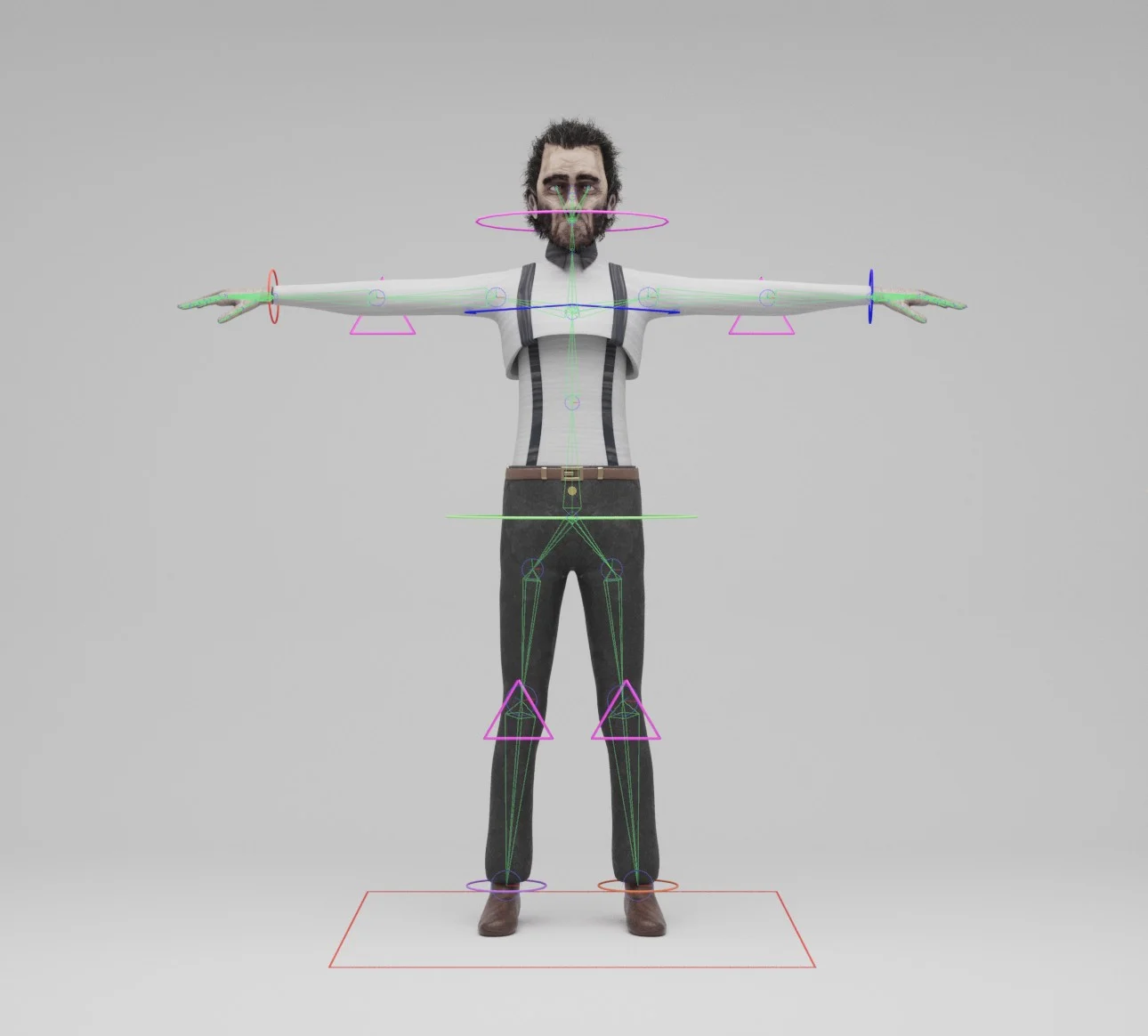
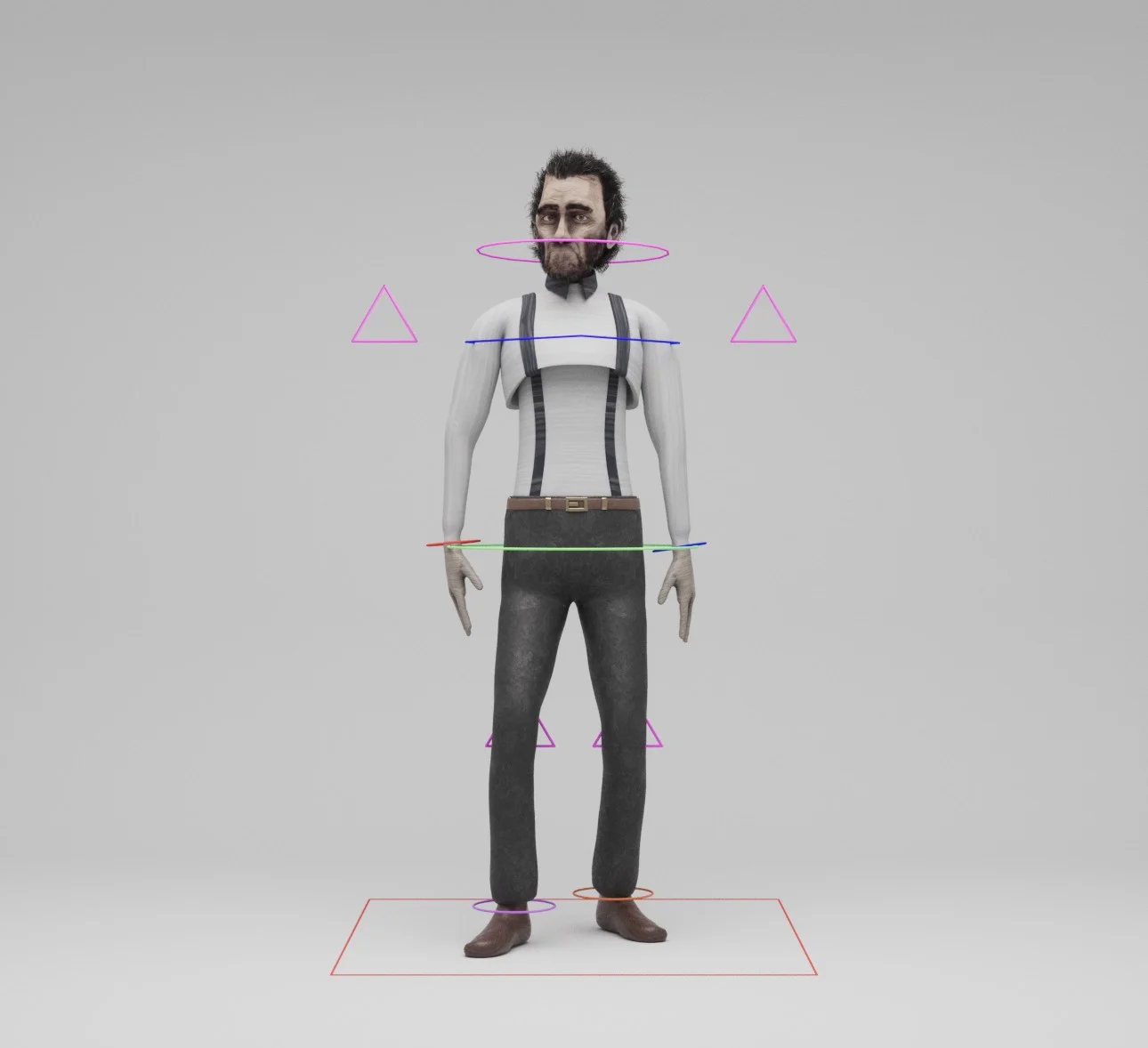
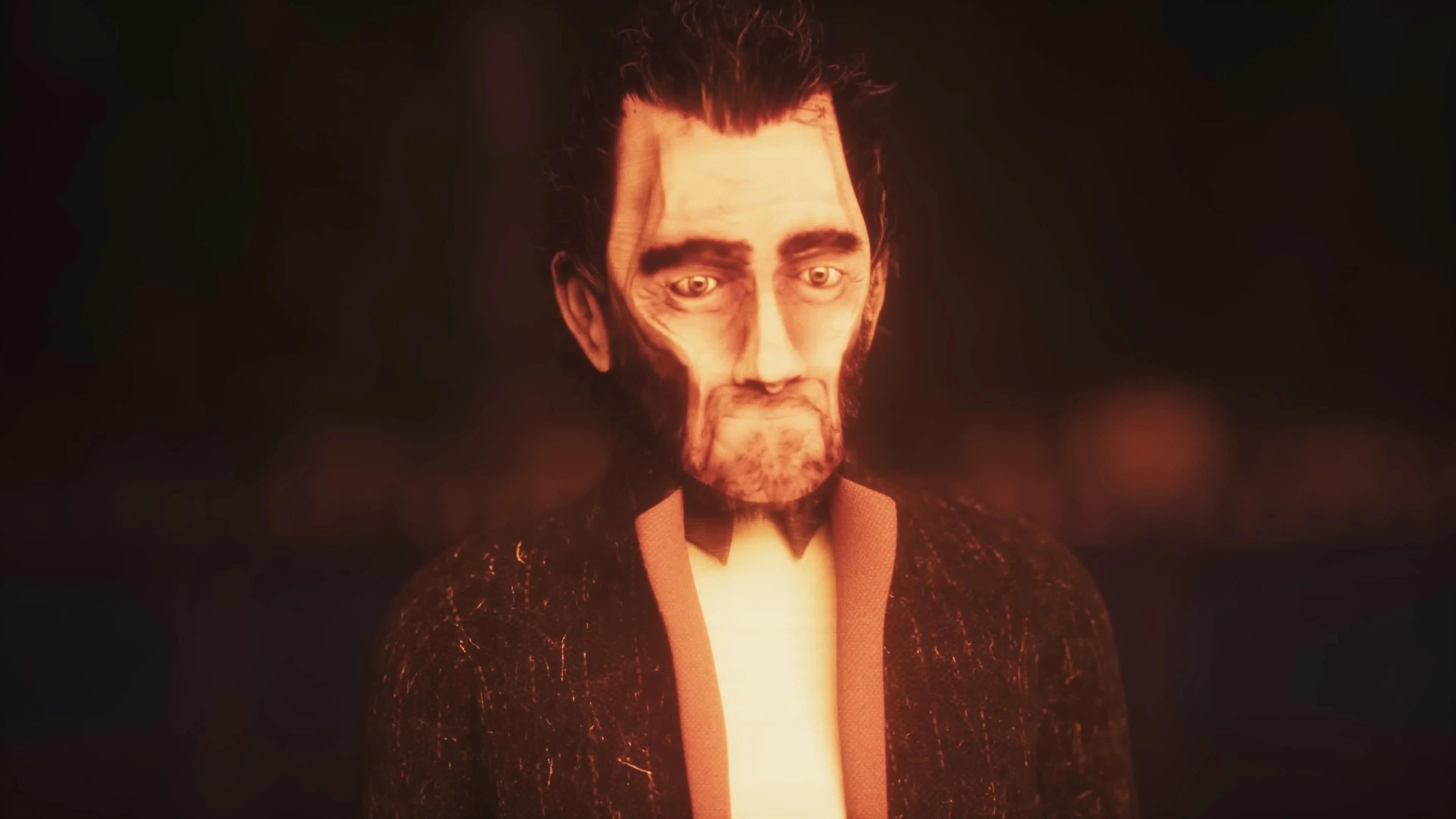
In designing the Artist, we started with references in stop motion animation, and we modelled the character as separate pieces that could fit together like a poseable figurine with ball and socket joints. As this design would have limited the range of motion, we went with a more traditional “bendy limbs” design that allowed for simpler rigging and mesh deformation. The head, upper body and lower body are connected in the poseable figurine style, which is why his chest has the overhang design, where you can imagine the two pieces snap fitting together. The Artist’s face needed to show the age and wear of an artist plagued by creative burnout and years of failing to meet the standards he sets for himself (even though his work is very good!) so we gave him sunken eyes and a disheveled appearance, using the sculpting toolset of Cinema 4D. The hair was fun to create, using Cinema 4D’s hair system, which creates individual hair strands that we then “brush” into position, and add modifiers to give it the messy, wiry look.
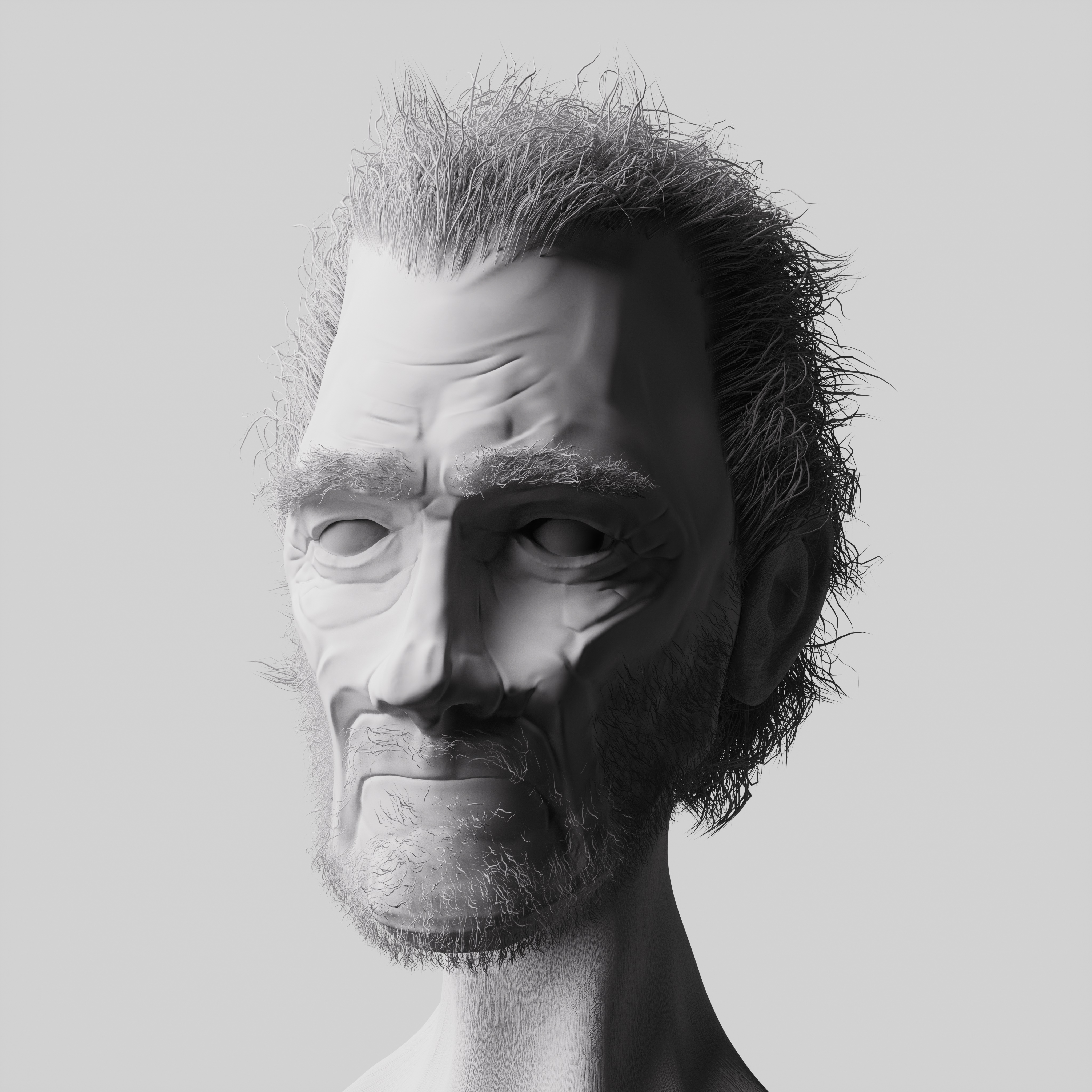
Once the model is complete, we then add materials and shaders to the surface, which then responds to light with physical properties such as Specular, Roughness and bump detail. To create the fine details in the Artist’s face, while keeping a fast, low resolution mesh to animate with, we use a process called normal map baking, where you use a high definition sculpt with lots of small fine details in the model, and then “bake” those details as a texture to apply to the lower resolution “retopologised” mesh, that is optimised for animation.
To prepare the Artist for animation, we create bones inside of the 3D model which act as a “skeleton rig” which then allows for us to manipulate the pose of the character. In the below images you can see the Artist’s skeleton and the control shapes we use as manipulators to animate with. Each of these controls is keyframed to different poses and then the 3D model blends between these poses, creating the movement of the character.
We're incredibly proud to have been part of bringing Woodcut to life, and we're grateful to Big Big Train for trusting us with such a rich, layered concept.
Thanks also to Tiago Laureano and Elle Bromfield for assisting with their 3D expertise, across the full production pipeline, from initial designs and modelling through to layout and rendering.
If you'd like to see how we can build a visual world for your project, get in touch.
Credits
Directed by Miles Skarin
Additional 3D Animation, Layout and Modelling by Tiago Laureano and Elle Bromfield.